
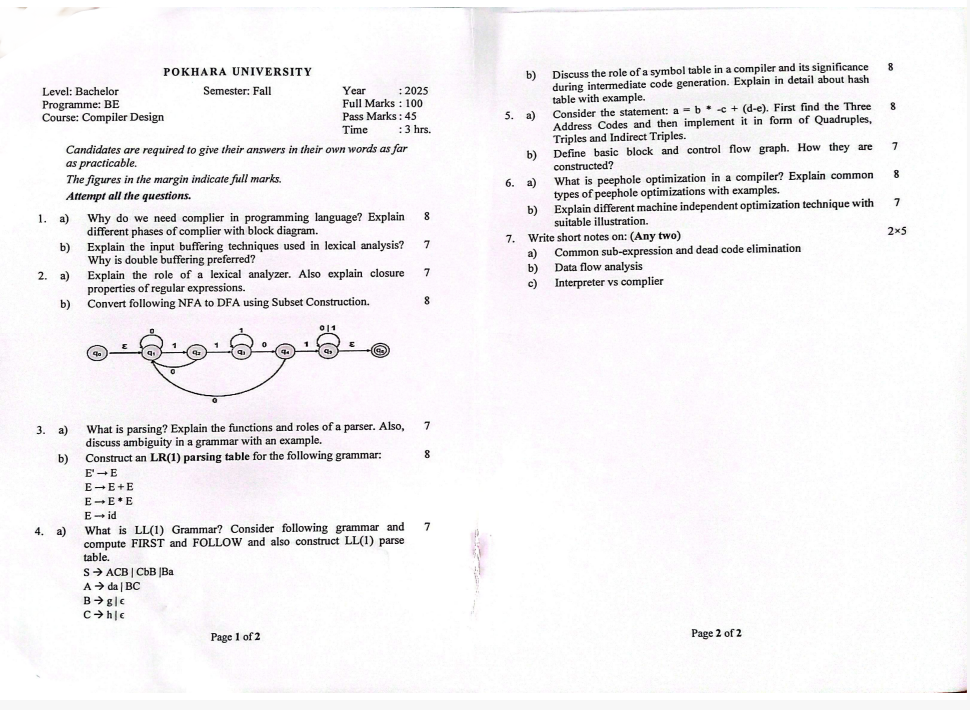
Compiler Design Past Papers are one of the best study resources for students preparing for Compiler Design examinations. By practicing Compiler Design Past Papers, students can understand the exam pattern, identify frequently asked questions, improve analytical and programming skills, and gain confidence before the final examination. Moreover, previous exam papers help students evaluate their preparation level and focus on topics that require additional revision. Whether you are preparing for semester or final exams, solving past papers is one of the most effective ways to achieve better academic results.
Why Use Compiler Design Past Papers?
Practicing Compiler Design Past Papers gives students valuable insight into the structure and difficulty level of university examinations. Instead of relying only on textbooks, students can experience real exam questions and learn how compiler concepts are tested in both theoretical and practical scenarios.
Some of the major advantages include:
- Understand the exam pattern and marking scheme.
- Identify important and frequently repeated questions.
- Improve logical thinking and problem-solving skills.
- Increase confidence before examinations.
- Learn effective time management during exams.
- Discover weak areas that need further practice.
Furthermore, regular practice reduces exam anxiety and helps students become familiar with different question formats.
Benefits of Compiler Design Past Papers
Using previous exam questions offers several long-term benefits for students. First, it strengthens conceptual understanding because students apply theoretical compiler concepts to practical programming problems. In addition, solving multiple papers improves speed, accuracy, and confidence.
The key benefits include:
- Better preparation for semester and final examinations.
- Improved confidence in solving theoretical and programming-related questions.
- Enhanced analytical and debugging skills.
- Effective revision of important Compiler Design topics.
- Better time management during examinations.
- Higher chances of scoring excellent grades.
As a result, students who regularly practice past papers often perform better than those who only study theoretical materials.
How to Prepare with Compiler Design Past Papers
To make the most of Compiler Design Past Papers, follow these study strategies:
- Carefully review the complete Compiler Design syllabus.
- Study lecture notes before attempting previous papers.
- Solve one past paper under timed examination conditions.
- Compare your answers with textbooks and class materials.
- Revise difficult compiler concepts after every practice session.
- Repeat older question papers until you can solve them confidently.
- Focus on understanding compiler phases instead of memorizing answers.
Additionally, maintain a regular study schedule and practice consistently throughout the semester.
Important Compiler Design Topics
While preparing, pay special attention to the following topics because they are commonly asked in examinations:
- Introduction to Compilers
- Language Processors
- Lexical Analysis
- Regular Expressions
- Finite Automata
- Syntax Analysis
- Context-Free Grammars
- Parsing Techniques
- Top-Down Parsing
- Bottom-Up Parsing
- Semantic Analysis
- Symbol Table Management
- Intermediate Code Generation
- Syntax-Directed Translation
- Runtime Environment
- Code Optimization
- Code Generation
- Error Detection and Recovery
- Compiler Construction Tools
- Applications of Compiler Design
Conclusion
Compiler Design Past Papers are an essential resource for every student preparing for Compiler Design examinations. They help students understand the examination pattern, improve analytical and programming skills, strengthen conceptual knowledge, and manage time effectively during exams. Furthermore, combining previous exam papers with textbooks, lecture notes, programming practice, and regular revision can significantly improve academic performance. Start practicing Compiler Design Past Papers today to increase your confidence and maximize your chances of achieving excellent examination results.